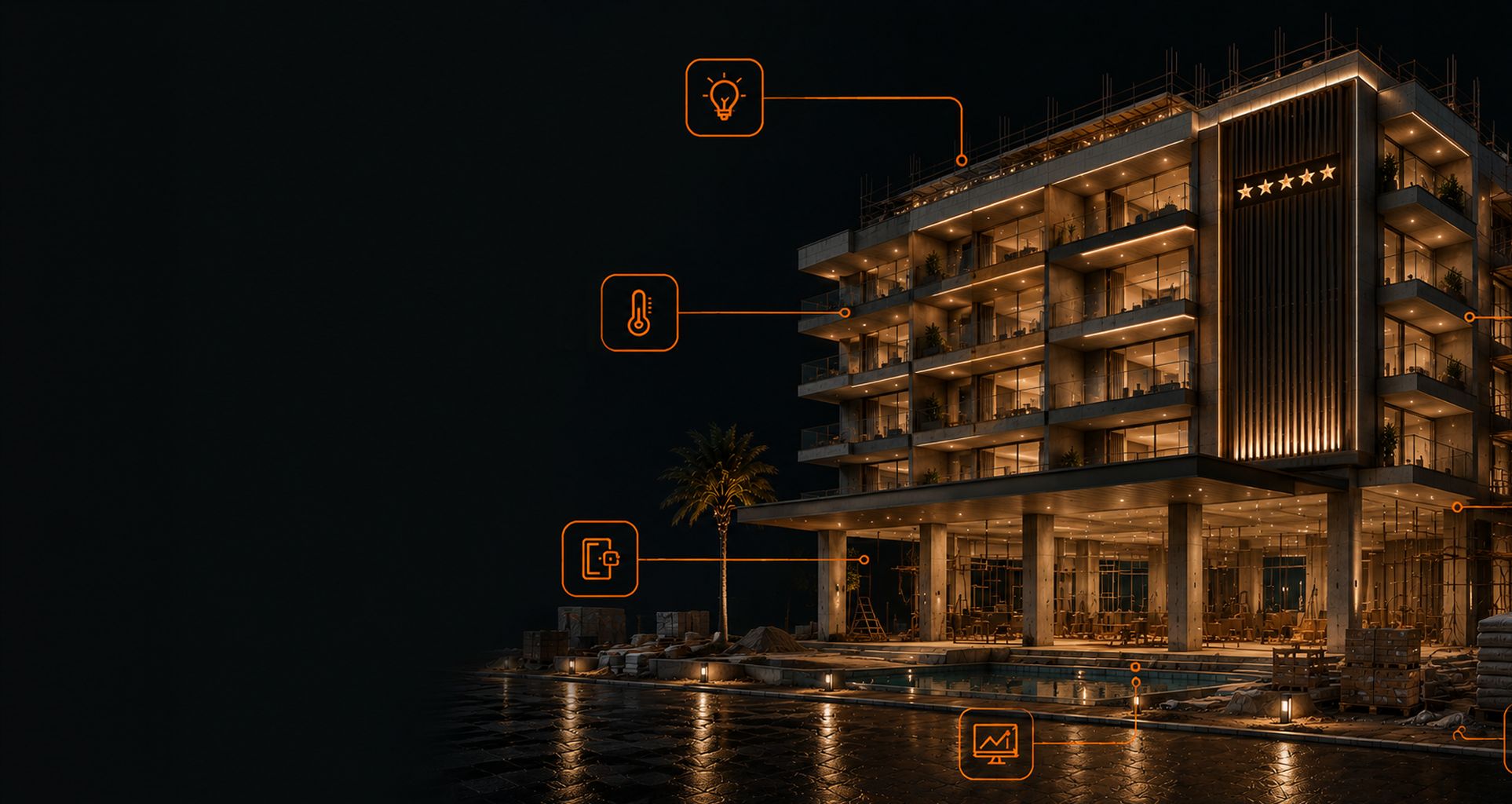

Seafront hotel lit at night, nearing completion, its controlled functions marked one by one — lighting, room temperature, access control and supervision.

Operators and technical directors

Hotel automation and BMS in Morocco

A hotel earns its living room by room. Every intervention is counted in lost room nights, and every empty room consumes energy unless something forbids it. Those two facts govern everything that follows.

New-build or operating hotel: what changes for the BMS

The recommendations are not the same depending on whether the hotel is still closed or already trading. It is the variable that commands the most — more than the number of rooms or the star rating.

Hotel BMS: what is paid in room nights and what is recovered in energy

A hotel does not close. It has neither the dead time of a new build nor the tolerance of a home, and its operation is counted by the day. Two principles follow, and they govern every decision on this page.

“Powered by IBT” and “Secured by IBT” seals applied to completed installations.
  1. 01

    Every intervention is counted in room nights

    A room out of service is a room that cannot be sold. Technology is therefore chosen as much on intervention time as on performance — which is what makes wireless defensible in an operating hotel, when it is not in a new build.

  2. 02

    Without PMS integration there is no saving

    Capping a setpoint achieves nothing if the system does not know which rooms are empty. Only the PMS knows that. A BMS that does not talk to it manages a building whose occupancy it cannot see.

What BMS to install in a hotel, block by block

Eight blocks, always in the same order — the network first, because everything else connects to it. What changes from one property to the next is not the list, it is the weight of each block and what goes into it.

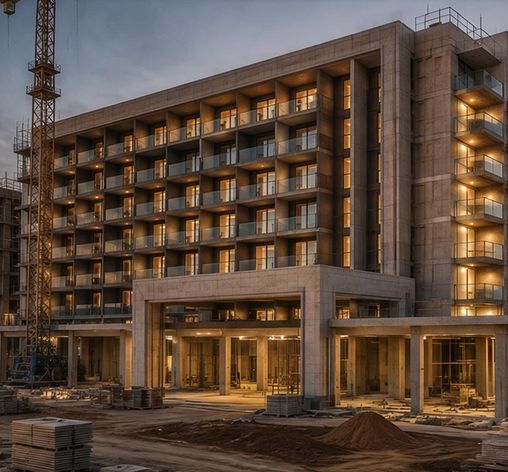
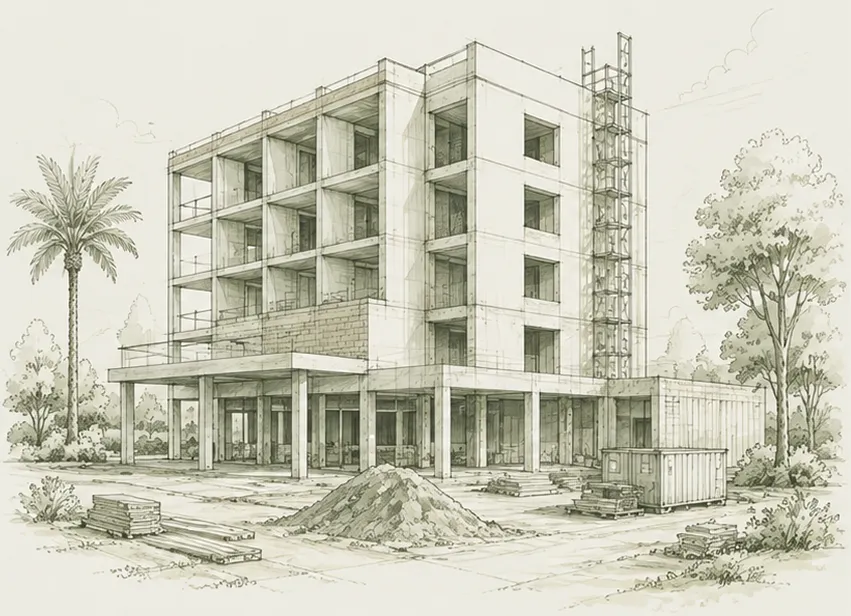
Architect's sketch of a hotel under construction, five-storey concrete frame, lift-shaft scaffolding and materials stored at the foot of the building.

New-build hotel or major renovation

The property is not yet trading, or is trading with wings closed. Risers and floor cabinets are accessible.
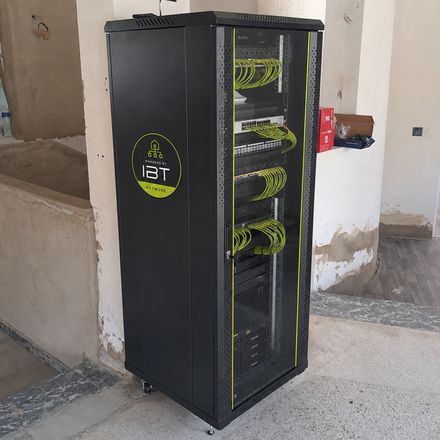
  1. IBT patching cabinet installed on a site still being finished, glazed door showing the patch panels, the switches and the green patch cords combed level by level.

    Backbone — network and Wi-Fi

    Essential

    Two networks, not one. The guest network and the operations network share neither their use nor their availability requirement.

    Network separation
    Operations VLAN strictly separated from guest Wi-Fi, from the addressing plan onwards. A busy evening in the lobby must not make the cameras drop out.
    • UniFi
    Distribution
    A patch cabinet per floor, risers sized with headroom. PoE throughout — cameras, access points, intercom and readers draw their power from the network, which removes that many sockets and local supplies to maintain.
    • UniFi
    Coverage
    Coverage survey before pricing, floor by floor. Wi-Fi is the leading guest complaint in hospitality: it is treated as a structural trade, not as a finish.
    • UniFi
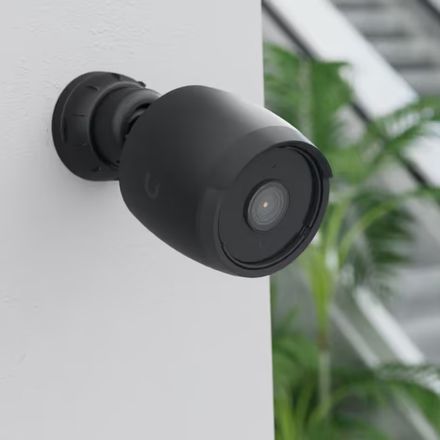
  2. Black surveillance camera surface-mounted on a light wall, aimed at a glazed bay and a garden.

    Security and access control

    Essential

    This is where the most binding decision of the project is taken, and the earliest.

    Guest room locks
    Hotel locks interfaced with the PMS, encoded at reception. Never a consumer lock — no estate management, no audit trail, no technical master. The choice is made before the doors are ordered, as they are machined to template at the factory.
    Video surveillance
    UniFi Protect on circulation, entrances and technical areas, on the network controller. One estate, one console for management and maintenance. Hikvision when the camera count tips the budget. Fields of view agreed on the drawings with management.
    • UniFi
    • Hikvision
    Access control
    UniFi Access on technical areas, guest floors and staff rooms — badges from the same ecosystem as the network, revoked when someone leaves without changing a lock. It is also what allows a floor to be closed out of season without physically sealing it.
    • UniFi
  3. Automation

    Essential

    One controller per room, one bus per floor, and supervision above. The room is the unit, not the building.

    Room controller
    KNX, one controller per room, actuators in the floor cabinet. The room keeps working if supervision goes down — a guest left in the dark because a server rebooted is not an option.
    • KNX
    Common area lighting
    DALI in circulation and public areas. Presence detection with a reduced night level rather than switch-off — a dark corridor that lights up as you walk is unsettling, not reassuring.
    • DALI
    • KNX
    Guest room air conditioning
    Thermostat and valve per room, setpoint capped by the BMS, cut-off on window contact. Unoccupied mode triggered by the card or by detection: this is the property's leading energy saving.
    • KNX
  4. Energy

    Essential

    In a home, metering is a comfort. In a hotel, it is what justifies the investment.

    Sub-metering
    By floor and by use — guest rooms, kitchen, laundry, refrigeration. Without that granularity, a consumption drift stays invisible until the bill.
    • KNX
    Plant
    Plant states brought back — chillers, boiler room, booster sets — over BACnet or Modbus depending on what the HVAC packages deliver. To be required in their specification, not discovered at commissioning.
  5. Outdoors

    Recommended

    Pool, exterior lighting and car park belong to the same supervision as the building, not to isolated controllers.

    Lighting and grounds
    Astronomical clock and scenes by time band. Partial switch-off late at night is programmed once and not discussed again.
    • KNX
    Pool and plant
    Technical alarms brought into supervision rather than a local sounder nobody hears.
  6. Audio and video

    Optional

    A commercial matter more than a technical one. To be addressed if the public areas justify it, not as a matter of course.

    Public area sound
    Independent zones — lobby, restaurant, pool — with priority given to safety announcements. Pre-wiring happens now; the equipment can wait for opening.
  7. Supervision and interfaces

    Essential

    The block that separates a hotel from a large home. Without it you have automated rooms and no managed building.

    PMS integration
    Interfacing with Opera, Mews or Protel depending on the property. It is what gives the BMS the information it cannot deduce: which room is sold, which is empty, which frees up this morning.
    Operator station
    Per-floor schematic, prioritised technical alarms, consumption history. Designed for the hotel's technical manager, not for us.
  8. Ecosystem and assistants

    Ruled out

    Consumer voice assistants have no place in a guest room: a personal account to create, a history attached to a guest who leaves, no estate management. The comfort expected is delivered by the card and the thermostat, not by a microphone.

What we advise against in this case

Residential home automation — Loxone, Control4 — in a hotel. This is not about quality: these systems have no multi-room management, no PMS interface, and no operability by staff who turn over. We advise even more firmly against leaving PMS integration outside the scope of the package. It is the most expensive mistake in this family of projects, and it can only be repaired by going back through the rooms one by one, in a trading property.

Hotel refurbishment while trading

The property does not close. Work proceeds room by room, and every room handed back to the schedule is the only measure that counts.

  1. IBT patching cabinet installed on a site still being finished, glazed door showing the patch panels, the switches and the green patch cords combed level by level.

    Backbone — network and Wi-Fi

    Essential

    Often the real project, and the one to address first — before the automation, not alongside it.

    Priority
    Wi-Fi is the leading cause of poor online reviews. It is redone before anything else: a refurbished room with mediocre coverage is still a room that gets marked down.
    • UniFi
    Routing
    Existing risers and corridor ceilings, floor by floor, following the occupancy schedule. UniFi over PoE, one access point per landing redone while the floor is closed.
    • UniFi
  2. Black surveillance camera surface-mounted on a light wall, aimed at a glazed bay and a garden.

    Security and access control

    Recommended

    The item that redoes best without closing, provided battery-powered autonomy is accepted.

    Guest room locks
    Battery-powered standalone hotel locks, not wired. Encoded on site, replaced door by door in under an hour. This is the only item where wireless is preferable even when wired would be possible.
    Video surveillance
    UniFi Protect on circulation, reusing existing routes and the controller already in place for the network. Technical areas first, guest floors as the phases progress. Hikvision where an estate exists and still holds up.
    • UniFi
    • Hikvision
  3. Automation

    Recommended

    The scenario where the constraint is commercial rather than technical. What governs is how long a room is out of service.

    Room controller
    KNX RF, or wired KNX where an existing conduit allows the bus to be pulled from the corridor. The decision rests on one question: how long is the room made unavailable?
    • KNX
    Wall controls
    Locally powered keypads replacing the existing switches, on the same centres. No plaster repair, no paint, no drying time — that is what holds the schedule.
    Air conditioning
    A gateway on the existing splits and a wireless thermostat. The plant is left alone — reworking the cooling of a trading property is a different kind of project.
  4. Energy

    Recommended

    Metering goes in at the floor distribution board without entering the rooms. It is the item that moves fastest for the least disruption.

    Sub-metering
    By floor and by use, at the distribution boards. It requires no room to be taken out of service, and gives a before-and-after baseline from the first phase.
    • KNX
  5. Outdoors

    Optional

    Grounds and exterior lighting are redone out of season, when they inconvenience no one. Rarely urgent, rarely blocking.

    Lighting
    Reworked with an astronomical clock on the existing circuits. No trench in this scenario.
  6. Audio and video

    Ruled out

    Reworking sound in public areas that are in service means closing those areas. While the property is trading it is not a workable project: it waits for the next technical shutdown.

  7. Supervision and interfaces

    Essential

    It must be designed for a mixed estate from the first phase, because it will stay mixed until the last.

    Progressive aggregation
    Supervision that accepts several equipment generations side by side, phase by phase. Rebuilding it at the third phase costs more than having planned for it at the first.
    PMS integration
    To be connected from the first phase, even covering only ten rooms. It is what allows the real gain to be measured and the rest to be decided on figures rather than on a promise.
  8. Ecosystem and assistants

    Ruled out

    Same reason as on a new build, plus one more — an estate in the middle of being harmonised does not need an extra layer that nobody will know which rooms it controls.

What we advise against in this case

Promising a homogeneous estate. A phased refurbishment mechanically produces a mixed estate: it has to be planned for in supervision rather than denied in the presentation. We also advise against full wired KNX where the property cannot close a wing — the technical gain does not offset the lost room nights, and we prefer to say so before the quote. Finally, do not rework the cooling plant at the same time as the rooms: these are two projects, and running them together means risking operations to save a few weeks.

When to decide a hotel's BMS: the construction timeline

Four decisions are taken well before commissioning, and three of them cannot be recovered once the property has opened.

  1. When the tender package is writtenPMS integration enters the scope, by name, with the target PMS named. This is the item nobody specifies and that costs three times more once the hotel has opened: it then has to be done room by room.
  2. Before the doors are orderedThe choice of locks. Doors are machined at the factory to the template of the chosen lock; changing your mind after ordering means re-machining on site, door by door, in a delivered building.
  3. Before the seriesOne fully equipped mock-up room, operated for a week by the staff who will manage it. It is the only way to discover before the hundredth room that a scenario is unreadable to a housekeeper.
  4. Before risers are closedRisers and floor cabinets sized with spare capacity. A hotel's extensions always happen floor by floor, never room by isolated room.
  5. At handoverHandover of the programming file, the per-floor schematic and supervision credentials to the technical manager. Without them, the slightest scenario change goes through us, and that serves no one.

The most common mistakes in hotel BMS

They look alike from one property to the next, and none of them comes from the equipment. All come from a decision taken when it cost nothing.

PMS integration is in no one's package

The low-voltage package assumes IT will do it; IT assumes the low-voltage package will. Nobody prices it, so nobody does it. The hotel opens with a BMS blind to occupancy, and the announced savings never arrive.

The setpoint is not capped

A guest who feels hot sets 16 °C and opens the window. Without a setpoint ceiling and window-contact cut-off, a property's energy bill is decided right there, room by room, all year round.

Guest Wi-Fi and operations share one network

A busy evening in the lobby and the cameras drop out. The operations VLAN must be separated from guest Wi-Fi at design stage — retrofitting it means reworking the addressing plan on a trading property.

A homogeneous estate is promised after a phased refurbishment

A refurbishment in an operating hotel mechanically produces a mixed estate. Supervision must be designed to accept that from the first phase, rather than rebuilt when the third arrives.

Scenarios are designed for management, not for staff

An interface conceived in a meeting turns out to be unusable by someone hired last week. Hotel staff turn over, and the installation must stay operable by the next person, not only by whoever attended the training.